
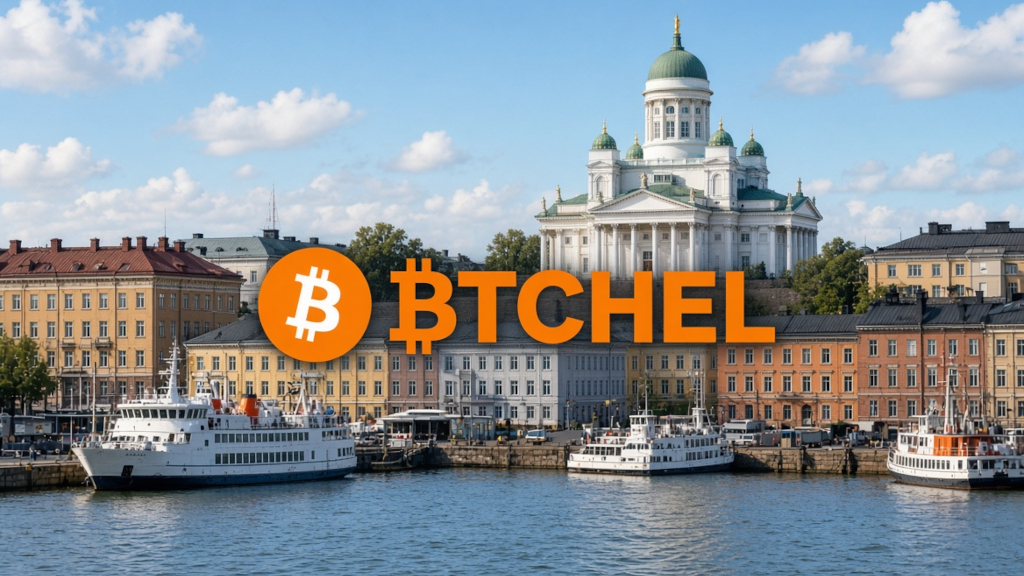
The Nordic Bitcoin scene is heading back to Helsinki this September as BTCHEL 2026 brings Bitcoin developers, entrepreneurs, miners, investors, policymakers, and advocates together for two days focused on the technology, economics, and principles shaping Bitcoin’s next chapter.
The second edition of the Nordic Bitcoin Conference will take place on September 25–26, 2026, at Kaapelitehdas (Cable Factory) in Helsinki, Finland.
After its 2025 debut attracted more than 1,000 attendees, 70+ speakers, and 20+ partners, BTCHEL is returning with an expanded program spanning three stages and a broader discussion of Bitcoin’s role in the Nordic and European economies.
A Bitcoin Conference With a Nordic Focus
BTCHEL’s focus is explicitly Bitcoin, with a particular emphasis on the Nordic region and the unique economic, political, technological, and energy conditions shaping Bitcoin adoption in Northern Europe.
The organizers describe the event as independent, bootstrapped, grassroots, and community-driven, while maintaining an international outlook. The conference aims to connect Nordic Bitcoiners with global builders and thought leaders while exploring how Bitcoin can function as money and infrastructure in the real world.
That regional perspective is specifically relevant as the Nordic countries combine advanced digital infrastructure, relatively sophisticated financial markets, abundant renewable energy, and growing interest in the relationship between energy markets and Bitcoin mining. At the same time, European regulation, monetary policy, financial surveillance, and questions surrounding individual financial sovereignty are becoming increasingly important for the Bitcoin industry.
BTCHEL intends to put those issues at the center of the conversation.
From Bitcoin Mining to European Regulation
The 2026 agenda covers a wide range of topics, but several themes stand out.
Bitcoin mining and energy will be a major focus. Sessions will examine whether artificial intelligence could compete with Bitcoin mining for energy resources, what constitutes a healthy mining ecosystem, and how miners can operate within changing energy markets. The conference will also host the European Mining Summit, extending the mining discussion beyond the main conference.
The relationship between Bitcoin and European politics is another major theme. Panels will address questions including Europe’s regulatory direction, Bitcoin’s relationship with the EU, and the people and institutions influencing European Bitcoin policy.
For Bitcoin businesses operating in Europe, these discussions could prove particularly valuable as regulation increasingly determines how exchanges, custodians, financial institutions, miners, and other companies can operate.
Bitcoin, Self-Custody and Financial Freedom
Most importantly, BTCHEL maintains a strong emphasis on the principles that have historically defined the Bitcoin movement.
Self-custody, privacy, censorship resistance, and financial sovereignty feature prominently throughout the program. One session asks directly what is preventing users from holding their own keys, while another explores what happens when governments can effectively turn off access to money.
The conference will also tackle Bitcoin’s security challenges, including a dedicated discussion on Bitcoin and quantum computing, featuring Blockstream CEO Adam Back alongside other experts.
These are not merely technical questions. As Bitcoin moves deeper into mainstream financial infrastructure, the balance between convenience, security, privacy, and user sovereignty becomes increasingly consequential.
Impressions from last year 🧡 pic.twitter.com/X5S7lMyLYr
— ₿TCHEL 🇫🇮 (@btchelevent) August 23, 2026
A Strong Lineup of Bitcoin Voices
BTCHEL 2026 has assembled a particularly strong speaker lineup, combining Bitcoin veterans with entrepreneurs, developers, activists, economists, miners, and voices from Nordic politics and civil society.
Confirmed speakers include Adam Back, Martti Malmi, Francis Pouliot, Giacomo Zucco, Knut Svanholm, Lyudmyla Kozlovska, Þórhildur Sunna Ævarsdóttir, Siim Land, Giovanni Santostasi, Stephan Kinsella, Cory Klippsten, Rick Messitt, and many others.
Martti Malmi’s presence is particularly significant given his role in Bitcoin’s earliest years and his direct involvement with Satoshi Nakamoto. Adam Back brings another connection to Bitcoin’s pre-history, having been cited in the Bitcoin white paper and later co-founding Blockstream.
But the lineup extends well beyond Bitcoin’s established personalities. The agenda includes miners, corporate treasury executives, policy voices, developers, privacy advocates, educators, and entrepreneurs—reflecting the increasingly diverse ecosystem surrounding Bitcoin.
Three Stages, Multiple Perspectives
BTCHEL 2026 will operate across three stages: Main, Expo, and OG.
The Main stage is geared toward some of the larger questions facing Bitcoin, including European regulation, energy, mining, financial sovereignty, corporate adoption, and the future of Bitcoin in Europe.
The Expo stage takes a more practical approach, with sessions covering Bitcoin taxation, adoption, self-custody, hardware wallets, Finnish Bitcoin investing, and other hands-on topics.
The program also includes an OG stage dedicated to deeper Bitcoin discussions and the community’s more experienced participants.
This combination should give BTCHEL a useful balance between high-level debate and practical Bitcoin education.
Bitcoin and the Nordic Economy
Perhaps the most interesting aspect of BTCHEL is its attempt to connect Bitcoin with the broader Nordic economic environment.
The conference will examine Bitcoin corporate treasury strategies, including how companies are putting Bitcoin onto their balance sheets. It will also explore Bitcoin adoption across the Nordic countries and the development of local Bitcoin communities and circular economies.
Finland is particularly interesting in this context. The country’s technology-oriented economy, energy infrastructure, and strong digital culture create a natural environment for conversations around Bitcoin mining, payments, financial infrastructure, and open-source development.
BTCHEL’s Finnish-language programming also demonstrates that the conference is not designed exclusively for the existing international Bitcoin crowd. It is attempting to connect the global Bitcoin ecosystem with local Finnish audiences and institutions.
For Bitcoiners traveling to Helsinki, BTCHEL is therefore shaping up as more than another conference on the European calendar. It is becoming a meeting point for the Nordic Bitcoin ecosystem and an increasingly relevant forum for discussions about Bitcoin’s place in Europe’s financial, political, and energy landscape.
Tickets
Ticket options currently include:
- Expo Ticket: €50
- Standard Ticket: €219
- OG Ticket: €369
- VIP Ticket: €1,099
- Student Standard Ticket: €99
The Standard ticket includes two-day conference access and the Main Stage, while higher-tier tickets add access to the OG stage, networking areas, side events, and other premium experiences.
The event’s VIP offering includes access to side events, a speaker dinner, a private sauna, a rooftop terrace, and the European Mining Summit. The broader event week is therefore designed to provide opportunities for networking and informal conversations in addition to the formal conference program.
BTCHEL 2026 takes place September 25–26 in Helsinki. For anyone interested in Bitcoin’s future in the Nordics—and in Europe’s broader relationship with Bitcoin—it is one of the key events to have on the calendar this September.
Apply promo code BitcoinEventsHQ to save 10% on your tickets!
Official website: https://btchel.com/