
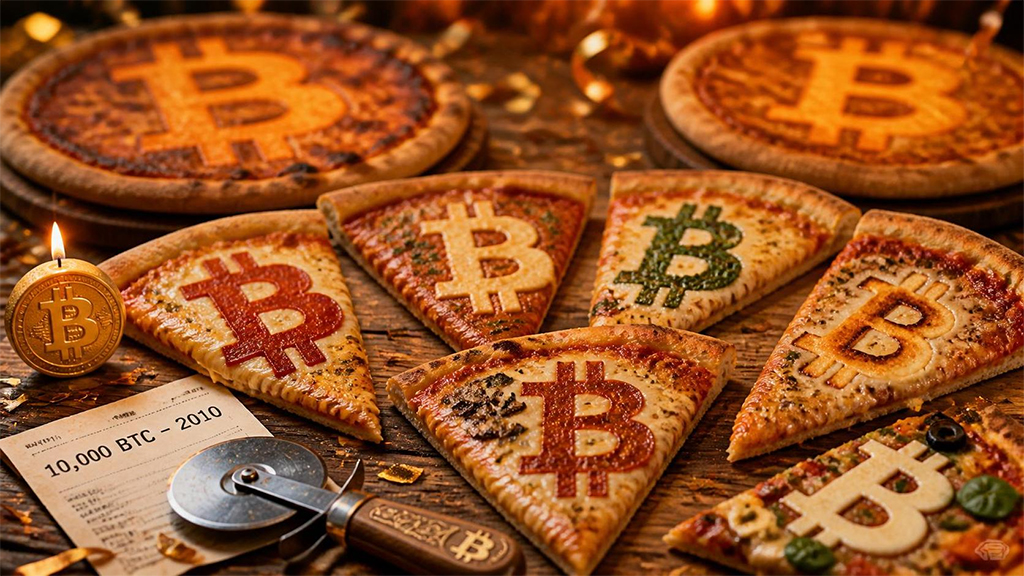
On May 17, 2010, Laszlo Hanyecz posted on a Bitcoin forum offering 10,000 BTC to anyone who would order him two pizzas. Jeremy Sturdivant—a teenager at the time, known online as “jercos”—saw the post, called Papa John’s, and had two pizzas delivered to Laszlo’s door in Florida five days later, on May 22.
He paid with his own money. He accepted 10,000 BTC in return. That transaction became the first time Bitcoin was used to purchase something in the real world.
Today, people hear the number—10,000 BTC — and their brain immediately runs a calculation. In today’s prices, those coins are worth roughly $800 million. So the story gets filed under “biggest financial mistake in history.”
But that framing only works if you assume Jeremy should have known what was coming. He didn’t. Nobody did. What Jeremy actually did was something quietly important: he said yes.
He looked at a strange new digital currency—unproven, unregulated, barely understood—and he treated it as if it had value. Not speculative future value. Present, usable, real value.
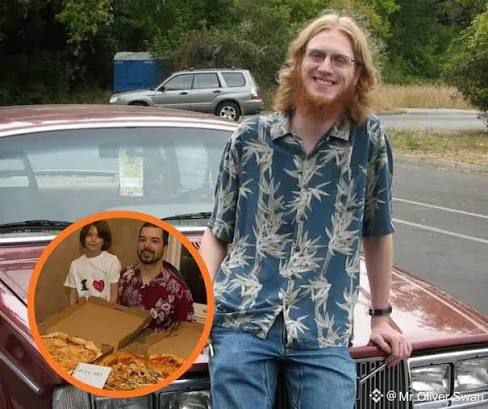
Jeremy ‘jercos’ Sturdivant, the guy who actually accepted 10,000 BTC for two pizzas back in 2010.
Bitcoin wasn’t born in an exchange
Before that pizza transaction, Bitcoin existed only as an idea passing between computers. It had a price in theory. It had enthusiasts in forums. But it had never crossed the barrier between digital experiment and real-world commerce.
Jeremy’s yes changed that. Two pizzas changed that.
The culture that existed in Bitcoin’s earliest days looked nothing like what you see today. There were no laser-eye profile pictures. No “number go up” memes. No institutional announcements or ETF filings. There was a small, weird, curious community of people who thought maybe… just maybe… this thing could work.
They were testing it. Sending it back and forth. Writing code. Buying things. Jeremy reportedly spent the rest of his Bitcoin on a road trip, using it wherever he could. Because that was the point. To use it.
Bitcoin Pizza Day is remembered wrong
It gets packaged as a cautionary tale. A punchline. The expensive pizza. But look at what actually happened: a new currency needed proof of concept. It got it. Two people—one in Florida, one wherever Jeremy was—completed a voluntary exchange using a currency that had never been used that way before. And it worked.
That single transaction created a template, showing that Bitcoin could clear. That a buyer and seller could agree on a price, complete a trade, and both walk away satisfied. Every Bitcoin transaction since traces a line back to that moment.
The people who built the foundation rarely get the statue
History remembers peaks, record prices, landmark legislation, and famous names. It forgets the teenager who picked up the phone, called a pizza place, and quietly helped prove that a new kind of money could actually function in the world.
So today Bitcoin Pizza Day is worth celebrating, but neither as a joke or a reminder of what could have been, but as a genuine marker of the moment Bitcoin stopped being theoretical.
Two pizzas. Ten thousand Bitcoin. One transaction that mattered more than the price ever will.