
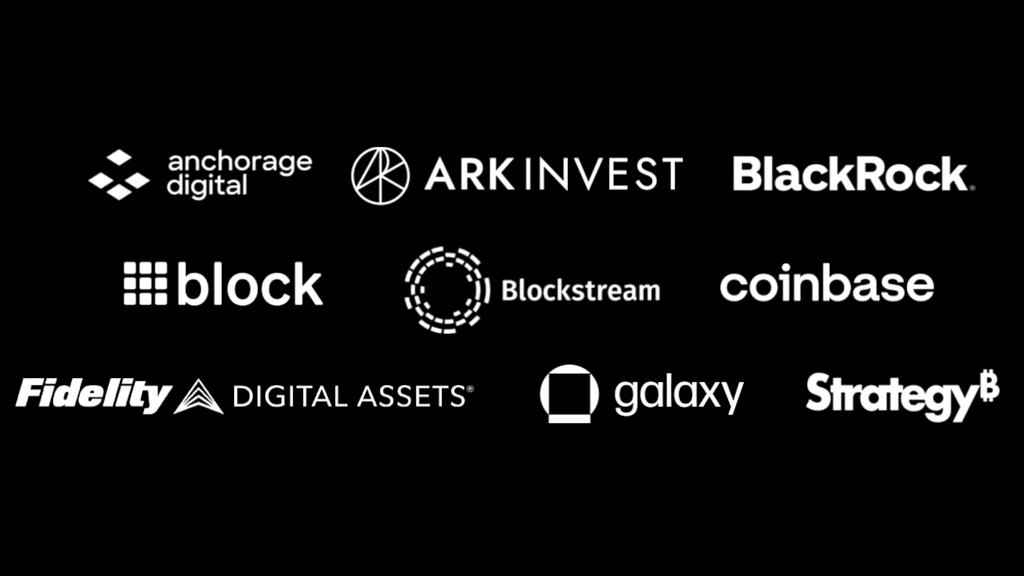
A coalition of nine leading financial institutions and Bitcoin companies announced the formation of the Bitcoin Security Consortium on Thursday, pledging a combined $15 million over the next three years to fund research and development aimed at keeping Bitcoin secure — including preparations for a future era of quantum computing.
The founding members—Anchorage Digital, ARK Invest, BlackRock, Block, Blockstream, Coinbase, Fidelity Digital Assets, Galaxy, and Strategy—represent a wide cross-section of the institutional Bitcoin world, spanning asset managers, custodians, exchanges, and infrastructure providers.
Day-to-day coordination falls to Mike Schmidt, Executive Director of Brink, a nonprofit dedicated to funding Bitcoin open-source developers, who will serve in a volunteer capacity.
“As long-term holders, we have every incentive to see Bitcoin remain secure for generations. Funding the people who do this work, and helping inform the conversation around it, is a natural way for us to contribute,” said Phong Le, Chief Executive Officer of Strategy.
The consortium will not set up a separate pooled fund, with each member independently directing its own contributions to whichever developers, researchers, or organizations it chooses. The group explicitly states it will not develop or direct Bitcoin’s protocol, take positions on specific protocol changes, or claim to represent Bitcoin’s development community, which remains decentralized and global.
“Bitcoin Core developers do incredibly important work, and we’re pleased that our firm and the others in this group will now be making significant additional funding available to support Bitcoin’s long-term security needs,” added Robert Mitchnick, Global Head of Digital Assets at BlackRock.
Quantum Computing: Distant Threat, Real Urgency
The centerpiece of the Consortium’s stated mission is supporting research into post-quantum cryptography—a field focused on developing cryptographic standards that would remain secure even if large-scale quantum computers eventually emerge.
The Consortium stresses that no such machine exists today. Although experts say quantum computers cannot yet break Bitcoin, researchers warn that preparing upgrades could take years, with as much as 6.9 million bitcoin—worth about $461 billion at current price—potentially at risk if the technology advances. A significant portion of that exposure comes from older addresses whose public keys are already visible on-chain.
Post-quantum signatures are dramatically larger than the ones Bitcoin uses today, in some cases hundreds of times bigger. A 2026 study published in the Journal of the British Blockchain Association modeled the transition directly: throughput drops 52 to 57 percent, fees increase two to three times, and storage requirements expand dramatically across the entire network. In other words, the upgrade is a defensive downgrade in user experience — costs are immediate, benefits are abstract and future-dated.
Today nine institutions including BlackRock, Fidelity, Coinbase, and Strategy announced the Bitcoin Security Consortium (@BTCconsortium), pledging $15M toward Bitcoin security work over the next three years. I’ve agreed to help coordinate the group’s work as a volunteer.
I said…
— Mike Schmidt (@bitschmidty) July 23, 2026
Developer Proposals in Motion
On the protocol side, developers are exploring multiple defenses, including removing on-chain public keys via BIP-360, adopting hash-based post-quantum signature schemes like SPHINCS+, and using a commit/reveal scheme to shield mempool transactions. Additional proposals such as Hourglass V2 would slow the spending of about 1.7 million already-exposed bitcoins, including Satoshi Nakamoto’s.
BIP-360 introduces Pay-to-Merkle-Root (P2MR), a proposed new output type that omits Taproot’s quantum-vulnerable key-path spend while preserving compatibility with Tapscript and script trees—a soft fork that does not affect existing Taproot outputs. Meanwhile, BIP-361, proposed by developers led by Jameson Lopp, outlines a post-quantum migration plan that would require holders to move their coins to quantum-resistant addresses or face permanent freezing by the network—a proposal that has already generated significant controversy in the community.
BIP-360 co-author Ethan Heilman has warned that upgrading Bitcoin to post-quantum cryptography could take seven years. That timeline, combined with the deliberate pace of Bitcoin’s governance process, is precisely what makes early funding and research valuable — and what critics might point to as the core challenge money alone cannot solve.
A Crowded Week for Bitcoin Security Funding
The Consortium’s announcement comes just two days after Galaxy Digital launched its own standalone initiative—Bitcoin Quantum Readiness Initiative, a grant program that will support developers building quantum-resistant signature schemes, wallet migration tools, and security audits. The initiative aims to enhance Bitcoin’s security against potential future threats posed by quantum computing and includes the establishment of a Quantum Advisory Council, comprising experts from MIT and Boston University.
“There’s a gap between the quantum computing world, which is moving fast, and the Bitcoin development world, which is just beginning to engage with post-quantum cryptography in earnest,” said Galaxy’s head of firmwide research Alex Thorn.
Also worth noting that just one day before the Consortium’s announcement, Strive announced its own Bitcoin Stewardship Commitment, with an initial step of supporting Bitcoin open-source development through Brink. Schmidt, who will coordinate the new Consortium, said in response:
“Securing the software that runs the Bitcoin network is critical and often thankless work.”
The timing underscores that Brink—and Schmidt personally—is becoming a central hub for institutional Bitcoin funding, a concentration of coordination that some in the community may view with ambivalence.
The Consortium says it plans to publish and maintain public materials on Bitcoin’s security posture in the coming months, updated as developments warrant.