
Bitcoin just minted its 20 millionth coin. Sit with that for a moment. Out of the 21 million that will ever exist, only one million remain — and those will trickle out across more than a century of programmed halvings, each one slower than the last. More than 95% of all Bitcoin that will ever exist already does.
The supply is, for all practical purposes, fixed. This is one of the most consequential monetary events in modern history—and most people haven’t noticed.
Code Is Law
Gold miners will drill deeper when prices rise. Central banks will print when governments need it. Bitcoin will do neither.
The 21 million cap isn’t a promise made by a CEO or a pledge signed by a committee. It is code—running simultaneously on thousands of independent nodes across the globe, enforced by economic incentives so powerful that violating the cap would require the agreement of the very people harmed by doing so.
Satoshi Nakamoto embedded this limit in Bitcoin’s genesis block in January 2009. History gives us every reason to believe such a promise, made by any human institution, would eventually break. Rome debased the silver content of its denarii from over 95% purity to under 5% across two centuries. The Byzantine solidus—once the envy of the medieval world—saw its gold purity collapse from 95% to under 33% within decades. Every monetary promise ever made by a government has bent under enough pressure.
Seventeen years into Bitcoin’s existence, the architecture has held. Block after block. Halving after halving. The code did exactly what it was designed to do.
The Halving: A Clock Built Into the Blockchain
The journey to 20 million wasn’t a straight line. Bitcoin’s supply schedule is told in epochs.
In the early days, miners earned 50 new coins per block. Then came the first halving, reducing the reward to 25 BTC. Then 12.5. After the 2024 halving, that dropped to 3.125 BTC per block. Each halving is a programmatic tightening, a reminder baked into the protocol that Bitcoin was deliberately designed to grow scarcer over time.
Bitcoin’s annualized supply inflation now sits below 1%. That’s lower than gold—the asset long considered the hardest form of money in human history. We are no longer waiting for Bitcoin to become hard money. We are already living in that era.
Why This Moment Is Worth More Than a Tweet
It’s easy to scroll past a milestone. Numbers, after all, are abstract.
But what the 20 million mark represents is a proof that a monetary system can be designed without a central authority and hold its promises anyway. A proof that scarcity can be encoded—not just promised. A proof that in a world where every institution eventually bends to expediency, something can be built to resist it.
No bear market rewrote the rules. No single point of failure broke the chain. In seventeen years of adversarial pressure—regulatory, economic, and social—the 21 million limit has never wavered.
In an era of accelerating change, shifting world orders, and deep uncertainty about money, institutions, and the future, Bitcoin offers something rare: a reliable, internet-native store of value with one rule that will never change.
What Comes Next
The remaining one million Bitcoin will not arrive in a rush. The halvings ahead will stretch that final trickle across more than a century. Miners’ rewards will compress toward zero. Transaction fees will gradually take their place as the economic backbone of network security.
The supply side of Bitcoin’s story is, in effect, already written.
What remains unwritten is how the world comes to understand what that means.
The 21 million cap was always the point. It still is.
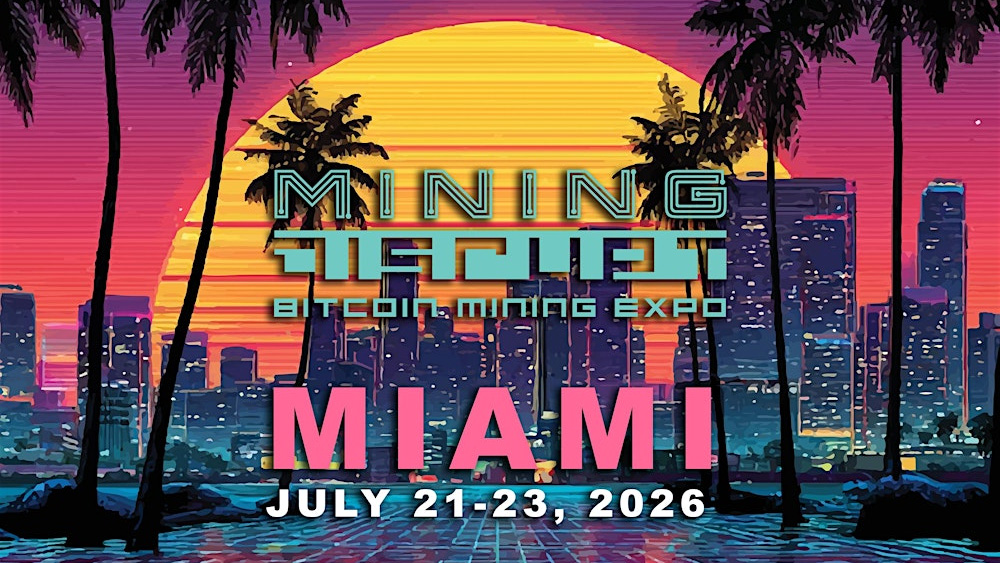
The future of Bitcoin form the miners’ perspective will be on the agenda at Mining Disrupt 2026 in Miami, July 21–23. Mining Disrupt is one of the longest-running dedicated mining industry conferences, bringing together operators, investors, hardware manufacturers, and energy providers to cover the technical, financial, and strategic dimensions of the space. If the past month is any indication, the conversations there will be substantive. Tickets are available through Eventbrite, and readers can use the code BitcoinEventsHQ at checkout for 20% off registration. More information on speakers and programming is at miningdisrupt.com.
🔔 Follow BitcoinOnly Events on Twitter (X), LinkedIn, Telegram, and Substack to be updated on the latest news and insights.